

This butternut squash soup is everything I want in a cozy homemade soup: smooth, creamy, and full of warm, comforting flavor. Roasting the squash first brings out its natural sweetness, while a little cinnamon adds just enough warmth without overpowering it. The result is a rich, velvety soup that’s especially lovely on a chilly fall evening.
Sweet roasted squash, tender onions, butter, and savory broth come together beautifully, with no heavy cream needed to make the soup creamy. Once everything is cooked, a quick blend turns it into a silky, spoonable soup that’s satisfying without feeling too heavy.
Enjoy it for a light lunch with crusty bread, or serve it as a starter at a cozy family dinner. Toasted pumpkin seeds add a satisfying crunch, while a drizzle of cream gives it an extra-special touch. The soup reheats nicely, too, so you can make a big batch and enjoy the leftovers later in the week.
What Makes This Soup So Good
Roasting gives the squash lightly browned edges and a deeper sweetness that carries through the soup.
- Rich, roasted flavor: Roasted squash and a pinch of cinnamon add warmth and natural sweetness.
- Creamy without cream: Blended squash creates a smooth, velvety texture without heavy cream.
- Simple ingredients: Made with squash, onion, butter, broth, and basic seasonings.
- Easy to make: Most of the cooking is hands-off, with just a few simple steps.
- Great for leftovers: Reheats beautifully and freezes well for another day.
Ingredients for Butternut Squash Soup
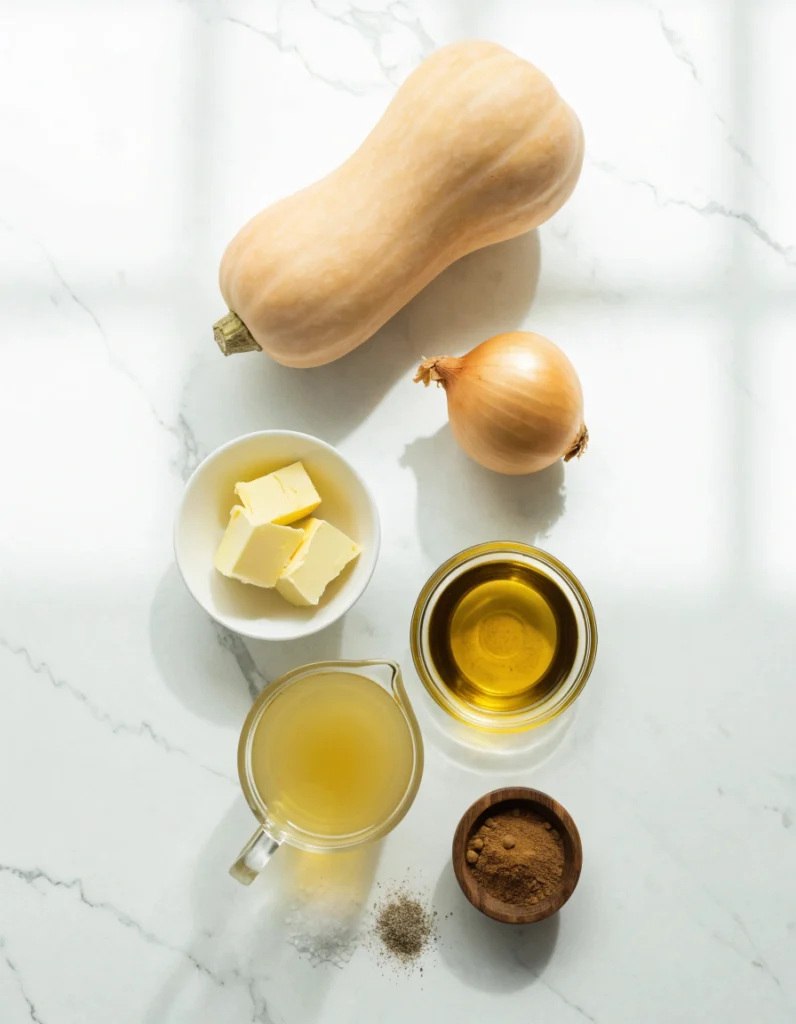
This butternut squash soup comes together with just a few simple ingredients. Here’s what you’ll need and how each one adds to the flavor.
- Butternut squash: Choose a firm squash with smooth, unblemished skin. The recipe uses peeled, seeded squash, so you’ll need to buy more than 3 pounds of whole squash to get the prepared amount.
- Yellow onion: Adds a mild, savory sweetness that balances the roasted squash.
- Butter: Adds richness and gives the soup a smooth, silky texture. Using unsalted butter makes it easier to adjust the seasoning to your taste.
- Olive oil: Lightly coats the squash so it roasts evenly and develops golden edges.
- Vegetable or chicken broth: Creates the soup’s base and adds savory flavor. Low-sodium broth works best.
- Ground cinnamon: A small pinch brings a gentle warmth to the soup without making it too sweet or spicy.
- Salt and black pepper: Bring the flavors together and balance the squash’s sweetness.
For serving, you can add a drizzle of heavy cream and a sprinkle of toasted pumpkin seeds for a little extra richness and crunch.
How to Make Butternut Squash Soup
Step 1: Roast the Butternut Squash
Preheat your oven to 425°F. Peel and seed the squash, then cut it into roughly 1-inch cubes. Spread them on a baking sheet in a single layer and toss with 1 tablespoon of olive oil. Roast for 25–35 minutes, turning halfway through, until fork-tender with lightly golden edges.
Step 2: Sauté the Onion
As the squash roasts, melt the butter in a large pot over medium heat. Add the chopped onion and cook for about 10 minutes, stirring occasionally, until it becomes soft and translucent. Keep the heat moderate to make sure the onion softens without browning.
Step 3: Add the Squash and Broth
Stir the roasted squash and cinnamon into the pot and cook for about 2 minutes to bring the flavors together. Pour in 4 cups of broth, bring the mixture to a gentle simmer, and let it cook for another 2 minutes.
Step 4: Blend Until Smooth and Creamy
Take the pot off the heat and use an immersion blender to puree the soup until smooth. If you’re using a countertop blender, blend in small batches and carefully vent the lid to allow steam to escape.
Gradually add up to 2 more cups of broth, a little at a time, until the soup reaches your preferred consistency. Taste and adjust the seasoning with salt and black pepper. Serve warm with a drizzle of cream or a sprinkle of toasted pumpkin seeds, if desired.

Tips for the Best Flavor and Texture
- Don’t overcrowd the baking sheet: Give the squash cubes enough space to roast rather than steam. Use two baking sheets if needed.
- Balance the sweetness: If the soup tastes a little too sweet, add a small squeeze of lemon juice to brighten the flavor.
- Blend for extra smoothness: A countertop blender gives the soup a silkier finish, especially if you prefer a restaurant-style texture.
- Taste before serving: Broths vary in saltiness, so adjust the seasoning at the end rather than adding too much salt early on.
Substitutions and Recipe Variations
You can adjust the broth, fat, or seasonings without changing the basic method.
- Make it vegan: Use olive oil in place of butter and choose vegetable broth instead of chicken broth.
- Add coconut milk: Replace some of the broth with unsweetened coconut milk for a richer, slightly tropical flavor.
- Try different spices: Add a pinch of nutmeg, ginger, or curry powder for a warmer, more aromatic soup.
- Use another winter squash: Kabocha or pumpkin can work well, though the sweetness and texture may vary.
- Use frozen butternut squash: Roast frozen cubes until tender and lightly browned, allowing extra time for moisture to evaporate. The flavor may be slightly less caramelized than with fresh squash.
If you’re looking for more cozy plant-based meals, my vegan lentil soup is another easy option for chilly days.
What to Serve With Butternut Squash Soup

This creamy butternut squash soup pairs beautifully with simple sides that balance its sweet, savory flavor.
- Crusty bread: Serve with warm sourdough, a fresh baguette, or soft dinner rolls for dipping into the soup.
- Grilled cheese: A crispy, cheesy sandwich makes the soup a satisfying lunch or dinner.
- Fresh green salad: A light salad with tangy vinaigrette balances the soup’s richness. For something a little more filling, try my Mediterranean quinoa salad with fresh vegetables and lemon dressing.
- Roasted vegetables: For a vegetable-focused dinner, serve the soup alongside whole roasted cauliflower. Its golden, seasoned exterior pairs nicely with the smooth soup.
- Fresh herbs: Sprinkle with chopped parsley or chives for a pop of color and freshness.
How to Store, Freeze, and Reheat
Butternut squash soup is a great make-ahead option. It stores well and tastes just as delicious and comforting the following day.
Refrigerating Leftover Soup
Allow the soup to cool a little before placing it in an airtight container. Make sure to refrigerate it within 2 hours of cooking, and keep it in the fridge for up to 3–4 days. Storing it in smaller containers makes it easy to take out individual servings whenever you need them.
Freezing and Thawing
Allow the soup to cool before transferring it to freezer-safe containers, leaving a little space for expansion. Freeze for up to 3 months for the best flavor and texture.
Thaw overnight in the refrigerator before reheating. Since the soup doesn’t contain heavy cream, it generally freezes beautifully.
Reheating Without Losing the Creamy Texture
Warm the soup in a saucepan over medium-low heat, stirring occasionally, until hot throughout. If it has thickened in the fridge, add a splash of broth to loosen it.
For a single serving, microwave in short intervals, stirring between each one. If the soup separates slightly after freezing, a good stir or quick blend should bring back its smooth texture.
Frequently Asked Questions
Do You Need to Peel Butternut Squash Before Roasting?
Yes, for this recipe, you’ll need to peel the squash because it’s cut into cubes before roasting. If you prefer to roast it in halves, you can leave the skin on and simply scoop out the tender flesh once it’s cooked.
Can You Make Butternut Squash Soup Without Using a Blender?
Yes! You can mash the cooked squash with a potato masher for a thicker, more rustic soup. It won’t be quite as silky, but it’ll still taste delicious. A food mill is another good option for a smoother texture.
What Makes Butternut Squash Soup Taste Bitter?
A slightly earthy flavor is normal, but strong bitterness isn’t. It can indicate naturally occurring bitter compounds called cucurbitacins. If your squash or finished soup tastes noticeably bitter, it’s safest to discard it rather than trying to cover the flavor with extra seasoning.


Butternut Squash Soup
Ingredients
Equipment
Method
- Preheat the oven to 425°F. Toss the cubed butternut squash with olive oil and spread it in a single layer on a baking sheet. Roast for 25–35 minutes, turning halfway through, until fork-tender and lightly golden.
- While the squash roasts, melt the butter in a large pot over medium heat. Add the chopped onion and cook for about 10 minutes, stirring occasionally, until soft and translucent.
- Stir the roasted squash and cinnamon into the onions and cook for 2 minutes. Add 4 cups of broth, bring to a gentle simmer, and cook for another 2 minutes.
- Remove from the heat and blend until smooth using an immersion blender or a countertop blender in small, carefully vented batches. Gradually add up to 2 more cups of broth until the soup reaches your preferred consistency.
- Stir in the salt and black pepper, then taste and adjust as needed. Serve warm with optional heavy cream and toasted pumpkin seeds.
Notes
- Squash weight: Use 3 pounds of peeled and seeded squash, not 3 pounds of whole squash.
- Consistency: Start with 4 cups of broth and add more after blending until the soup reaches your preferred thickness.
- Vegan option: Replace butter with olive oil and use vegetable broth.
- Storage: Refrigerate in an airtight container for 3–4 days or freeze for up to 3 months for best quality.