
Cinnamon Roll Pancakes turn a classic stack of fluffy pancakes into something that tastes much closer to your favorite cinnamon roll. A buttery brown sugar and cinnamon filling is piped right into each pancake as it cooks, creating a sweet spiral that caramelizes against the hot pan. Warm cream cheese glaze drizzled over the top gives you that familiar rich, tangy finish.
I like how you get plenty of cinnamon-roll flavor without making dough, waiting for it to rise, or turning on the oven. The pancake itself stays soft and tender, while the cinnamon filling creates gooey, caramelized spots in every bite. The warm glaze melts slightly when it hits the stack, so you really don’t need traditional pancake syrup here. If you enjoy homemade pancake recipes, these cottage cheese pancakes are another option for breakfast.
The cinnamon swirl is the part that deserves a little extra attention. You want the filling thick enough to pipe in a controlled spiral, and medium heat gives the pancake time to cook before the brown sugar gets too dark. Once you get that rhythm down, the rest of the recipe cooks much like a regular batch of pancakes.
Key Ingredients
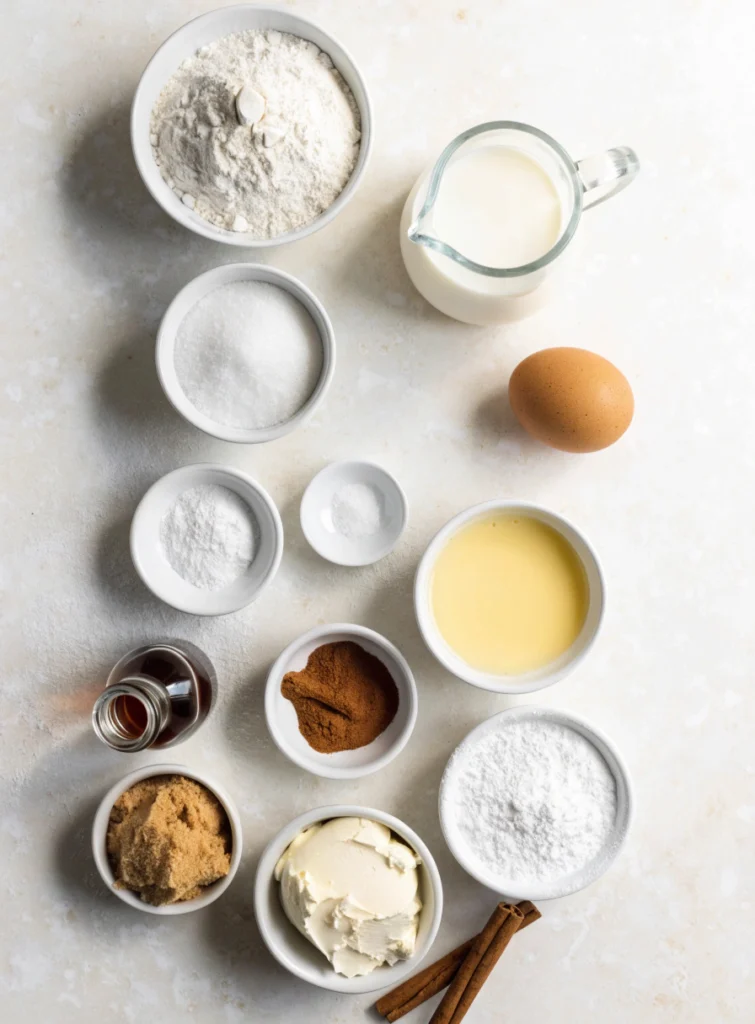
The ingredients are simple, but a few details make a real difference in how the pancakes cook and how well the cinnamon spiral holds its shape.
For the Pancake Batter
- All-purpose flour: Gives the pancakes enough structure while still producing a soft, tender center. Avoid packing it into the measuring cup, which can leave you with a thicker, heavier batter.
- Baking powder: Provides the lift that gives the pancakes their fluffy texture. For the best rise, make sure yours is still fresh.
- Milk: Supplies the moisture needed for a scoopable, spreadable batter.
- Egg: Helps bind the batter and gives the pancakes structure as they cook.
- Melted butter: Gives the pancakes a rich flavor while helping them stay tender. Allow it to cool slightly before mixing it into the batter so it combines smoothly with the remaining ingredients.
- Vanilla: Adds a warm background flavor that works particularly well with the cinnamon and brown sugar.
For the Cinnamon Swirl
- Light brown sugar: Its molasses flavor gives the filling that characteristic caramel-like cinnamon roll taste.
- Ground cinnamon: This is the main spice in the swirl, so use cinnamon that still smells noticeably fragrant when you open the container.
- Melted butter: Combines with the brown sugar and cinnamon to create a pipeable filling. The mixture should be fluid enough to squeeze from a small opening in a zip-top bag but not so loose that the spiral immediately runs across the pancake.
For the Cream Cheese Glaze
- Cream cheese: Adds a slight tang that balances the sweetness of the brown sugar filling and powdered sugar glaze.
- Butter: Gives the glaze richness and helps create its warm, drizzleable consistency.
- Powdered sugar: Sweetens and thickens the glaze without leaving a gritty texture.
- Vanilla extract: A little vanilla complements the buttery cream cheese flavor without overpowering the cinnamon.
How to Make Cinnamon Roll Pancakes
The order matters with this recipe. Prepare the cinnamon filling first so it has time to thicken while you mix the pancake batter.
Prepare the Cinnamon Filling
- Combine the filling. Stir the melted butter, light brown sugar, and cinnamon together in a medium bowl until evenly blended.
- Transfer it to a bag. Spoon the mixture into a zip-top bag and set it aside. The filling will thicken slightly as it sits, which makes the spiral easier to control. When you’re ready to cook, snip off just a tiny corner—you want a narrow opening for piping.
Mix the Pancake Batter
- Combine the dry ingredients. Add the flour, sugar, baking powder, and salt to a large bowl and stir them together.
- Add the wet ingredients. Make a well in the middle of the dry ingredients, then pour in the milk, egg, melted butter, and vanilla.
- Mix gently. Start by whisking the wet ingredients in the center, gradually pulling in the flour from the sides. Mix just until everything comes together. A few small lumps are perfectly fine, as overmixing can make the pancakes less tender.
Cook and Swirl the Pancakes
- Heat the pan. Set a nonstick skillet or griddle over medium heat. Once the surface is hot, lightly grease it before adding the batter.
- Add the batter. Pour about ¼ to ⅓ cup of batter per pancake onto the pan, using the back of your scoop to gently spread it if needed.
- Pipe the swirl. Squeeze the cinnamon filling onto the uncooked surface in a spiral, beginning near the center and working outward. Stop before reaching the edge so the filling is less likely to run onto the pan.
- Watch for the flip cues. Cook the first side for about 2 minutes. When the edges look defined and bubbles have formed across the surface, carefully flip the pancake.
- Finish cooking. Cook the other side for another 1 to 2 minutes, or until the pancake is cooked through. Move it to a plate, then repeat with the remaining batter and cinnamon filling.
- Clean between batches. Wipe away any cinnamon-sugar residue from the griddle before adding more batter. This small step matters because leftover sugar can burn and give the next pancakes a bitter, overly dark surface.
Make the Glaze and Serve
- Melt the butter and cream cheese. Add both to a microwave-safe bowl and heat for about 30 seconds. Stir well, then microwave in 15-second intervals as needed until the mixture is smooth and evenly combined.
- Finish the glaze. Stir in the powdered sugar and vanilla until smooth and creamy.
- Glaze the pancakes. Stack the pancakes while they’re still warm and drizzle the cream cheese glaze over the top. I like serving them right away, while the centers are soft and the warm glaze can settle into the cinnamon spirals.
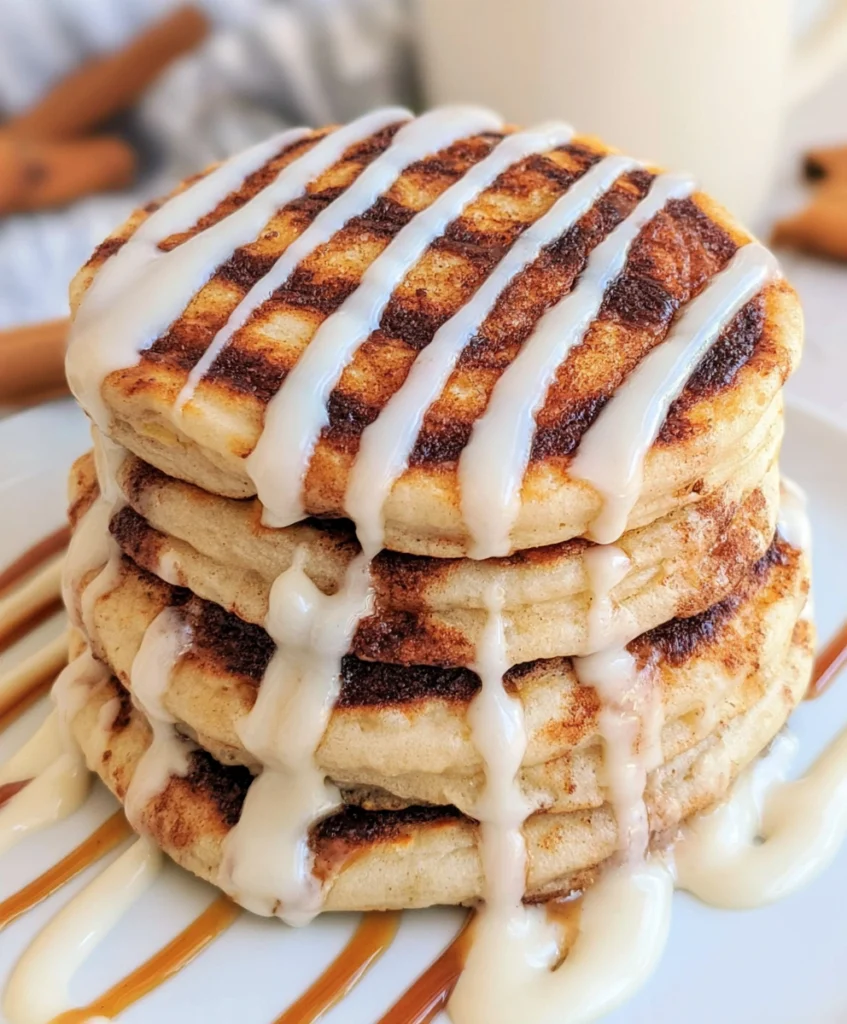
Tips for a Defined Cinnamon Swirl
The cinnamon spiral is what makes these pancakes different from a regular stack, and its consistency matters more than making a perfectly shaped swirl. A few small details make the swirl much easier to control.
- Cut a small opening in the bag. Start with a tiny snip at one corner. A large opening releases too much filling at once and makes it harder to control the spiral.
- Keep the heat at medium. Brown sugar can go from caramelized to burnt quickly. If your pancakes are becoming very dark before their centers finish cooking, lower the heat rather than shortening the cooking time.
- Don’t worry about making the spiral perfect. The filling will soften and caramelize naturally as the pancake cooks. Focus on spreading the cinnamon swirl throughout the pancake so you get some of that sweet filling in plenty of bites.
Substitutions and Variations
You can make a few simple changes without affecting what makes these pancakes work. Since the cinnamon filling relies on melted butter and sugar, keep the basic proportions and cooking method the same instead of making major substitutions.
- Use pancake mix for a shortcut. Make your favorite boxed pancake mix according to the package instructions, then pair it with the same cinnamon filling and cream cheese glaze. A thicker, fluffy pancake batter works best because it holds the cinnamon swirl well.
- Make a simple vanilla glaze. If you don’t want cream cheese, you can use a basic powdered sugar and vanilla glaze instead. It will be sweeter and lighter, without the tangy richness of the cream cheese version.
- Add pecans or walnuts. Chopped nuts pair nicely with the brown sugar and cinnamon. I prefer scattering them over the finished pancakes instead of adding them to the filling, since the pieces can clog the piping bag and make the spiral harder to pipe.
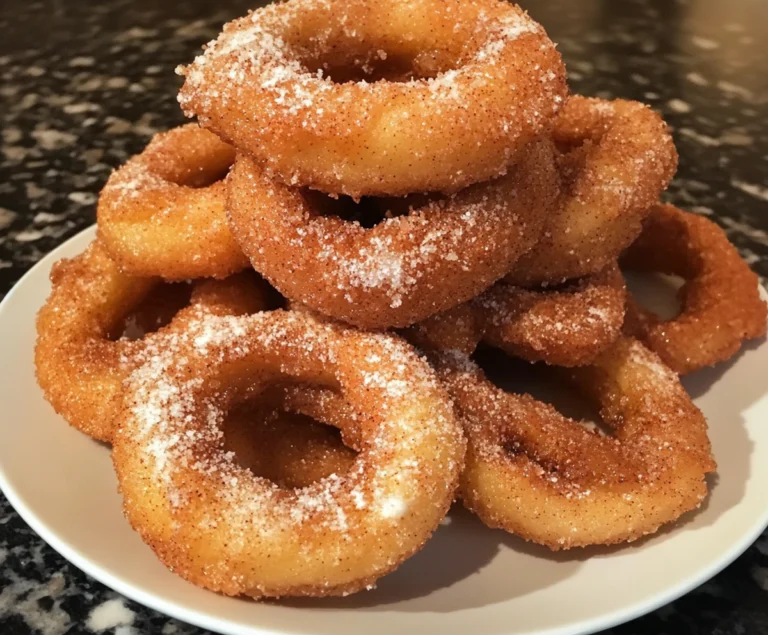
If you love warm cinnamon flavors, these fried cinnamon apple rings are another delicious treat to try.
Storing and Reheating
These pancakes are at their best straight from the griddle, when the centers are soft and the cinnamon swirl is still warm and gooey. If you have leftovers, storing the pancakes and cream cheese glaze separately gives you better results when reheating.
- Refrigerate: Let the pancakes cool completely, then store them in an airtight container with parchment or wax paper between layers to prevent sticking. Keep them refrigerated for up to 3 days.
- Freeze: Freeze the cooled, unglazed pancakes in a single layer until firm, then transfer them to a freezer-safe bag or container. Place parchment between pancakes if you want to remove them individually.
- Store the glaze separately: Refrigerate leftover cream cheese glaze in a covered container rather than glazing pancakes you plan to store. This keeps the pancakes from becoming overly soft.
- Reheat gently: I prefer reheating refrigerated pancakes briefly in the microwave until just warmed through. Avoid overheating them, since the cinnamon-sugar filling can become extremely hot while the pancake itself starts to dry out.
- Glaze after reheating: Warm the pancakes first, then drizzle the cream cheese glaze over them. If the refrigerated glaze has become too firm to drizzle, warm it very briefly and stir until smooth.
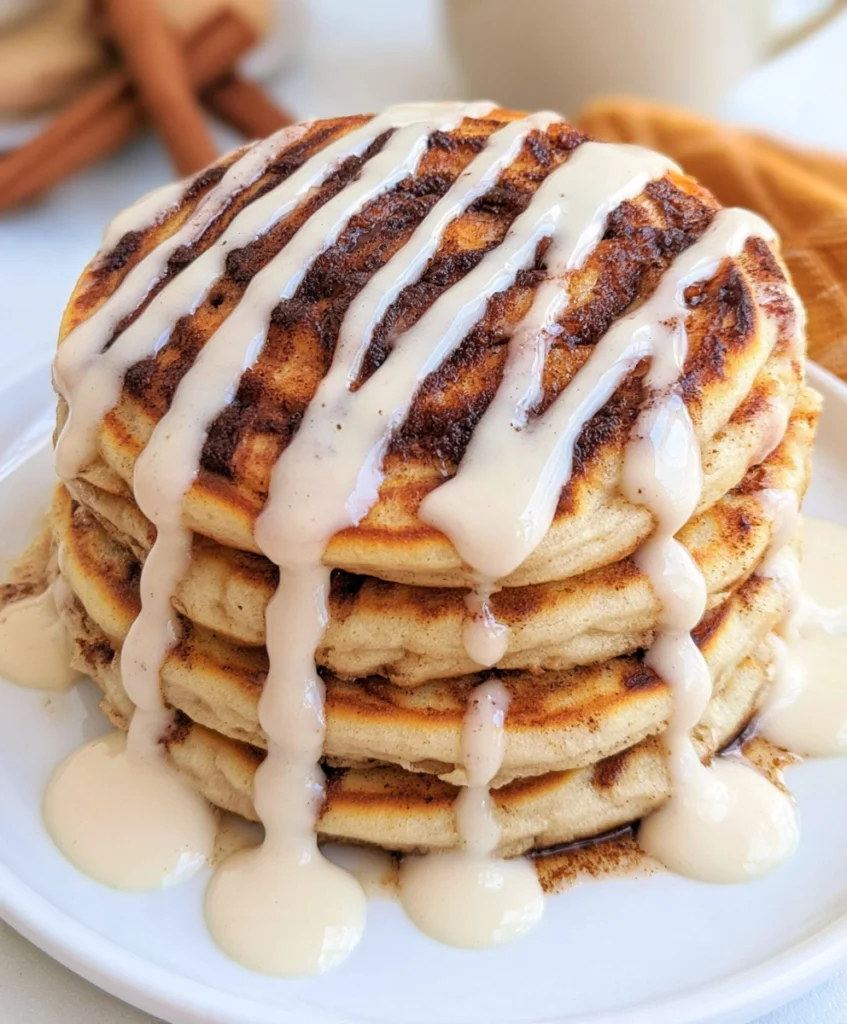
Cinnamon Roll Pancakes FAQs
Why did my cinnamon swirl spread or disappear?
The filling was likely too warm and runny when you added it to the batter. Let it cool until it becomes thick enough to hold its shape when piped. If it flows from the bag with almost no pressure, wait a little longer before making the next pancake.
Can I make the cinnamon filling ahead of time?
Yes. You can make the filling in advance and keep it covered in the refrigerator. Since the butter hardens as it chills, let the mixture come closer to room temperature before putting it into a piping bag. It should be soft enough to pipe easily without becoming warm or runny.
Can I make the pancake batter ahead of time?
I prefer making the batter shortly before cooking. Baking powder begins working once it comes into contact with the liquid ingredients, so a freshly mixed batter gives you more reliable lift. If you want to get ahead, combine the dry ingredients beforehand and keep them covered, then add the wet ingredients when you’re ready to cook.
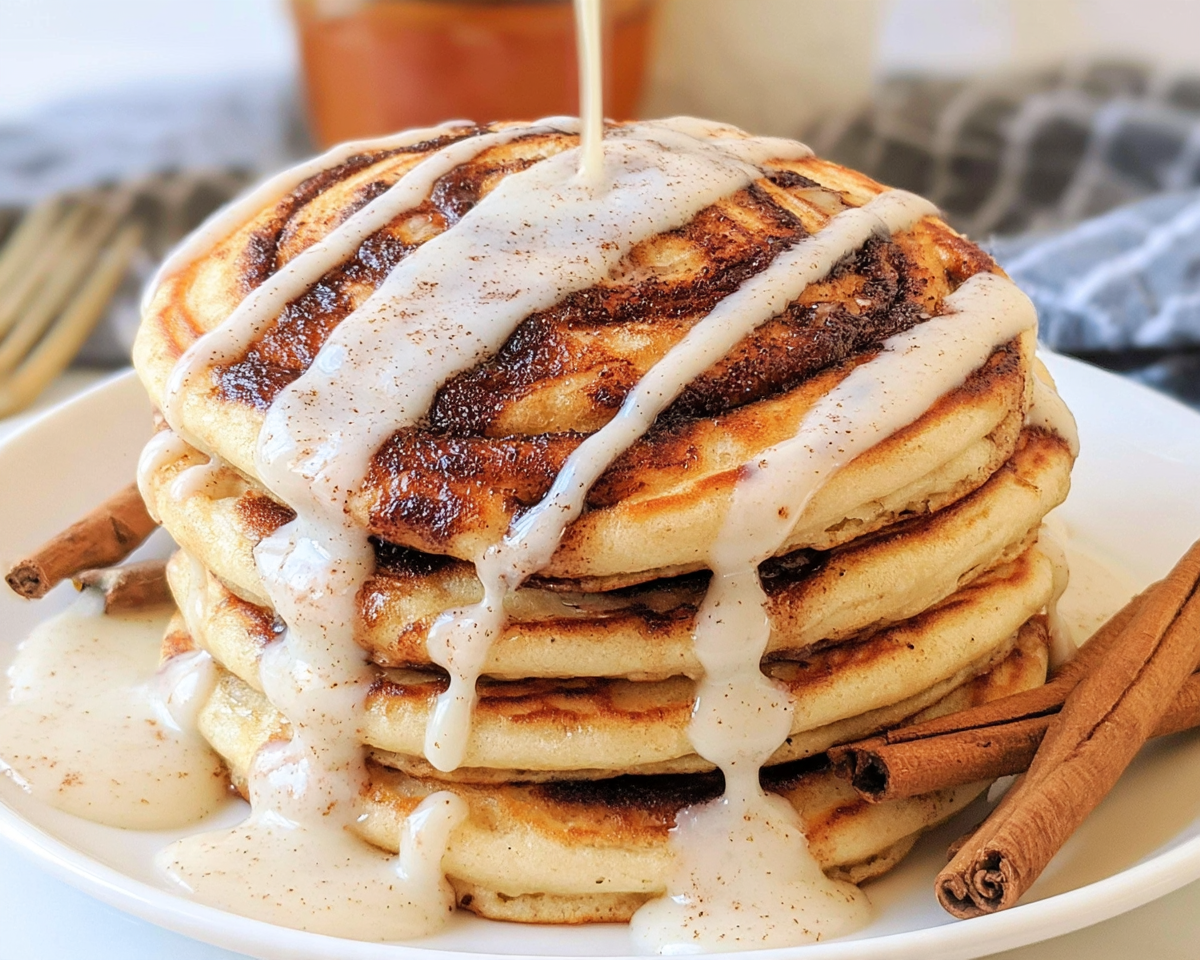
Cinnamon Roll Pancakes
Ingredients
Equipment
Method
- Make the cinnamon swirl. Stir the melted butter, brown sugar, and cinnamon together until evenly combined. Transfer the filling to a zip-top bag and let it sit while you prepare the pancake batter.
- Combine the dry ingredients. Stir the flour, sugar, baking powder, and salt together in a large bowl.
- Mix the batter. Make a well in the dry ingredients and add the milk, egg, melted butter, and vanilla. Mix just until combined. A few small lumps are fine.
- Heat the griddle. Heat a lightly greased nonstick skillet or griddle over medium heat.
- Add the batter. Pour ¼ to ⅓ cup of batter per pancake onto the hot cooking surface.
- Add the cinnamon swirl. Snip a small corner from the bag of cinnamon filling. Pipe a spiral over the pancake, starting near the center and stopping before you reach the edge.
- Cook the pancakes. Cook for about 2 minutes, until bubbles appear and the edges look defined. Carefully flip and cook for another 1 to 2 minutes, until cooked through.
- Continue cooking. Transfer the pancake to a plate. Wipe away cinnamon-sugar residue from the cooking surface before continuing with the remaining batter and filling.
- Make the cream cheese glaze. Place the butter and cream cheese in a microwave-safe bowl. Heat for about 30 seconds, stir, then heat in 15-second intervals as needed until they combine smoothly.
- Finish the glaze. Stir in the powdered sugar and vanilla until smooth and creamy.
- Serve. Drizzle the cream cheese glaze over the warm pancakes and serve.
Notes
- Let the cinnamon filling sit until it is thick enough to pipe rather than run across the batter.
- Keep the skillet or griddle over medium heat. Brown sugar can burn if the cooking surface becomes too hot.
- Keep the cinnamon spiral away from the pancake’s outer edge to reduce leaking.
- Wipe away caramelized cinnamon-sugar residue between batches if needed.
- For the best lift, mix the pancake batter shortly before cooking.