

This black bean soup is the kind of meal I like to make when I want something hearty without turning dinner into a big project. It starts with onion, carrot, celery, and red bell pepper, then builds flavor with garlic, cumin, oregano, and a slow simmer with black beans and vegetable broth. The result is deeply savory, warming, and substantial enough to serve as a full meal.
What makes this version especially practical is the use of canned black beans. They keep the prep simple, and you can still get a rich, naturally thick texture without adding flour or cream. Blending just part of the soup makes the broth creamy while plenty of whole beans remain for a little bite and texture.
A splash of fresh lime juice and a handful of cilantro brighten everything at the end, which keeps the soup from tasting too heavy. You can leave it mild, add more heat, or finish each bowl with avocado, shredded cheese, sour cream, or extra cilantro depending on what you have on hand.
Ingredients That Build the Flavor
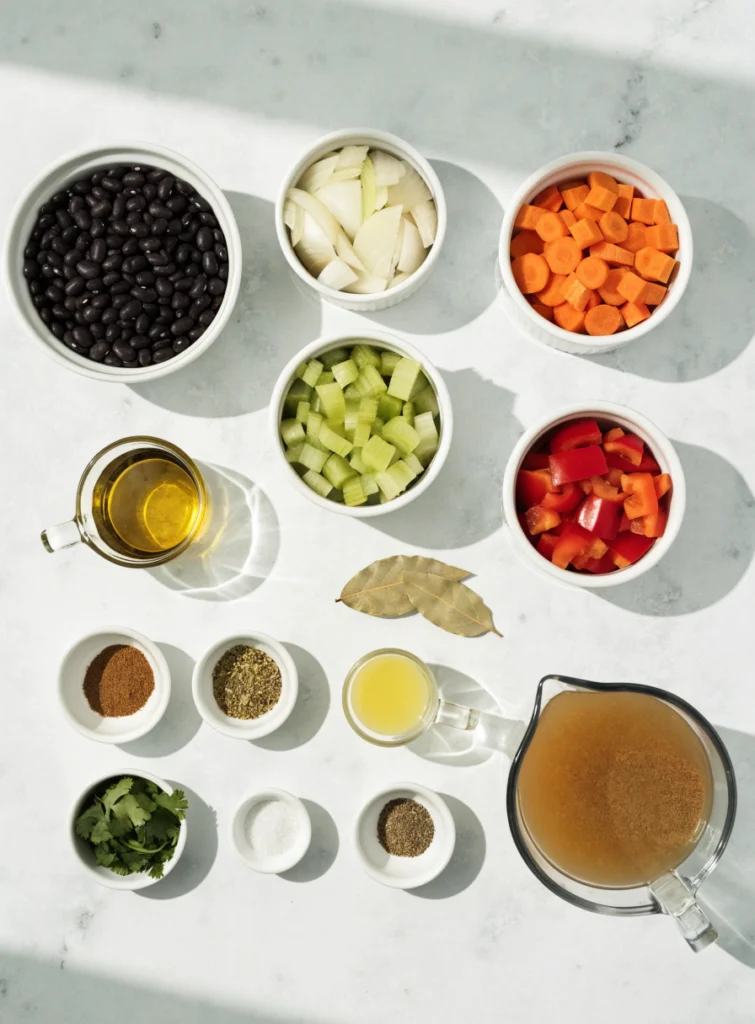
The ingredient list is simple, but a few choices make a noticeable difference in how the soup tastes and feels. The vegetable-forward base keeps the black beans at the center, while warm spices and fresh lime help the finished soup stay balanced rather than heavy.
Black Beans
Canned black beans are ideal here because they make the soup quick and dependable. Rinsing and draining them removes some of the canning liquid and excess sodium, which gives you better control over the final seasoning.
Choose beans that are tender but still hold their shape. Since part of the soup gets blended later, you want the remaining beans to keep some texture instead of disappearing completely into the broth.
Aromatics, Spices, and Broth
- Onion, carrot, and celery create the savory backbone of the soup and add a little natural sweetness as they soften.
- Red bell pepper brings mild sweetness and a fresh vegetable flavor without making the soup spicy.
- Garlic adds depth, especially when it is cooked briefly after the vegetables have softened.
- Ground cumin and dried oregano give the soup its warm, earthy character without overpowering the beans.
- Bay leaf adds a subtle background note during the simmer and should be removed before blending or serving.
- Vegetable broth provides the cooking liquid and keeps the recipe meat-free. A flavorful, not overly salty broth works best.
- Fresh lime juice and cilantro are added at the end, where they brighten the soup and cut through the richness of the beans.
Wait until the soup is nearly finished before deciding how much salt it needs. Canned beans and packaged broth can vary quite a bit in sodium, so tasting at the end gives you much better control.
How to Make Black Bean Soup
- Sauté the vegetables. Warm the olive oil in a large pot over medium-high heat. Add the onion, carrot, celery, and red bell pepper, and cook for about 5 minutes, stirring occasionally, until the vegetables start to soften.
- Add the garlic. Reduce the heat to medium and add the minced garlic. Cook for 30 to 60 seconds, stirring constantly, just until fragrant. Since garlic can burn quickly, continue with the next step as soon as its aroma comes through.
- Build the soup. Stir in the rinsed black beans, vegetable broth, cumin, oregano, bay leaf, salt, and black pepper. Mix everything well, then bring the soup to a gentle simmer.
- Simmer. Turn the heat down to low and let the soup simmer for about 25 minutes. By the end, the vegetables should be completely tender and the broth should have a deeper, more cohesive flavor.
- Blend part of the soup. Remove the bay leaf, then use an immersion blender to blend some of the soup right in the pot, keeping plenty of the beans whole. If you’re using a heat-safe countertop blender instead, carefully transfer the hot soup in small batches, filling the blender no more than halfway. Vent the lid to let steam escape, blend until smooth, then return the blended portion to the pot.
- Adjust the consistency. If you used a countertop blender, pour the blended soup back into the pot and stir it in. Add a little more broth if the soup is too thick, or blend another small portion if it still seems too thin.
- Finish with lime and cilantro. Stir in the fresh lime juice and chopped cilantro after the soup is done simmering. Taste and adjust the salt, pepper, or lime as needed before serving.
How to Judge the Right Texture
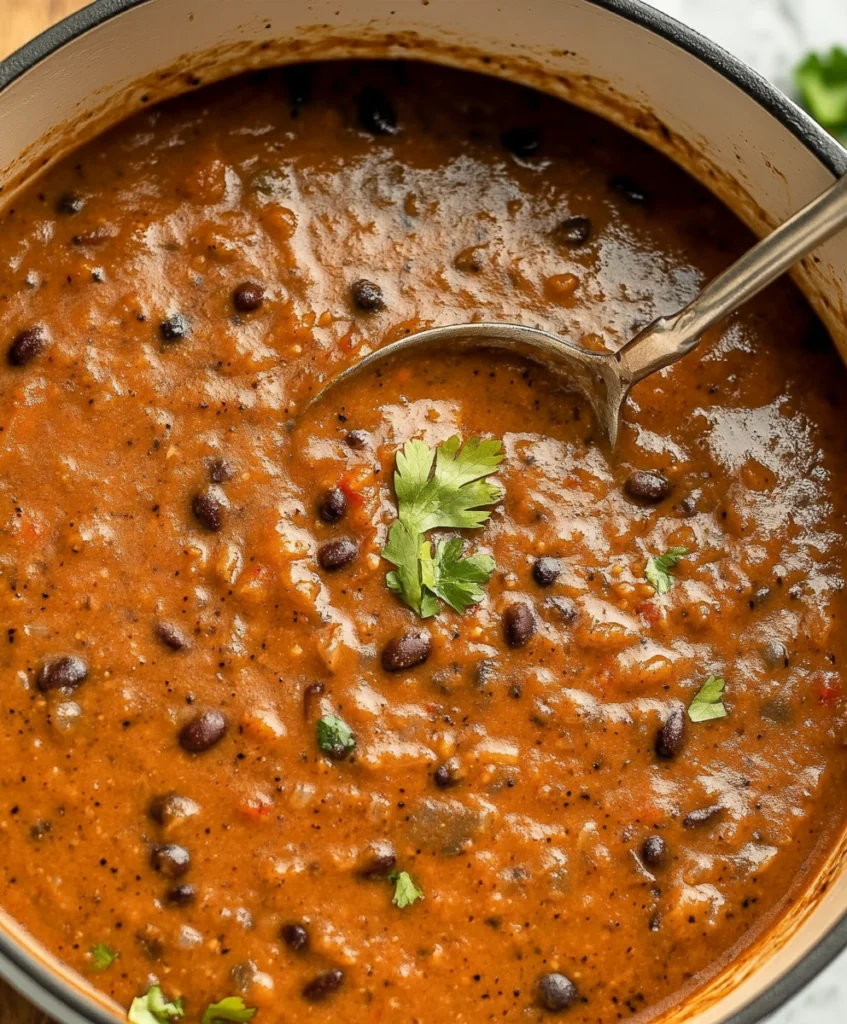
The finished soup should feel creamy around the beans while remaining loose enough to settle naturally into the bowl. You should still see plenty of whole beans rather than ending up with a completely smooth purée.
For a chunkier texture, stop blending while some of the broth still has visible texture. If you prefer a smoother soup, blend a little longer, checking the consistency as you go.
Toppings and Serving Ideas
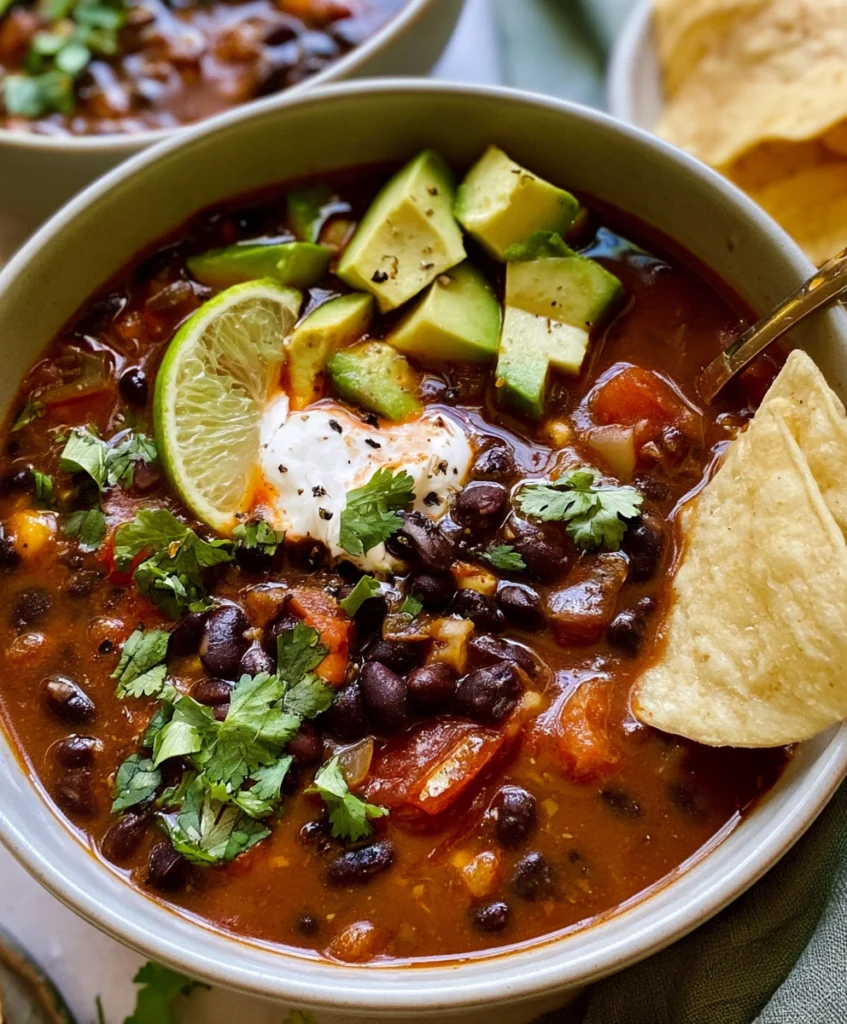
Black bean soup has a rich, earthy flavor, so toppings that are fresh, creamy, tangy, or crunchy work especially well. I like to set out a few choices so everyone can finish their bowl the way they like.
Best Toppings
- Avocado adds a cool, creamy contrast to the warm soup.
- Sour cream softens the spice and makes each spoonful a little richer.
- Fresh cilantro reinforces the bright flavor added at the end of cooking.
- Lime wedges are useful for anyone who wants a little more acidity.
- Shredded cheese adds a savory, melty finish.
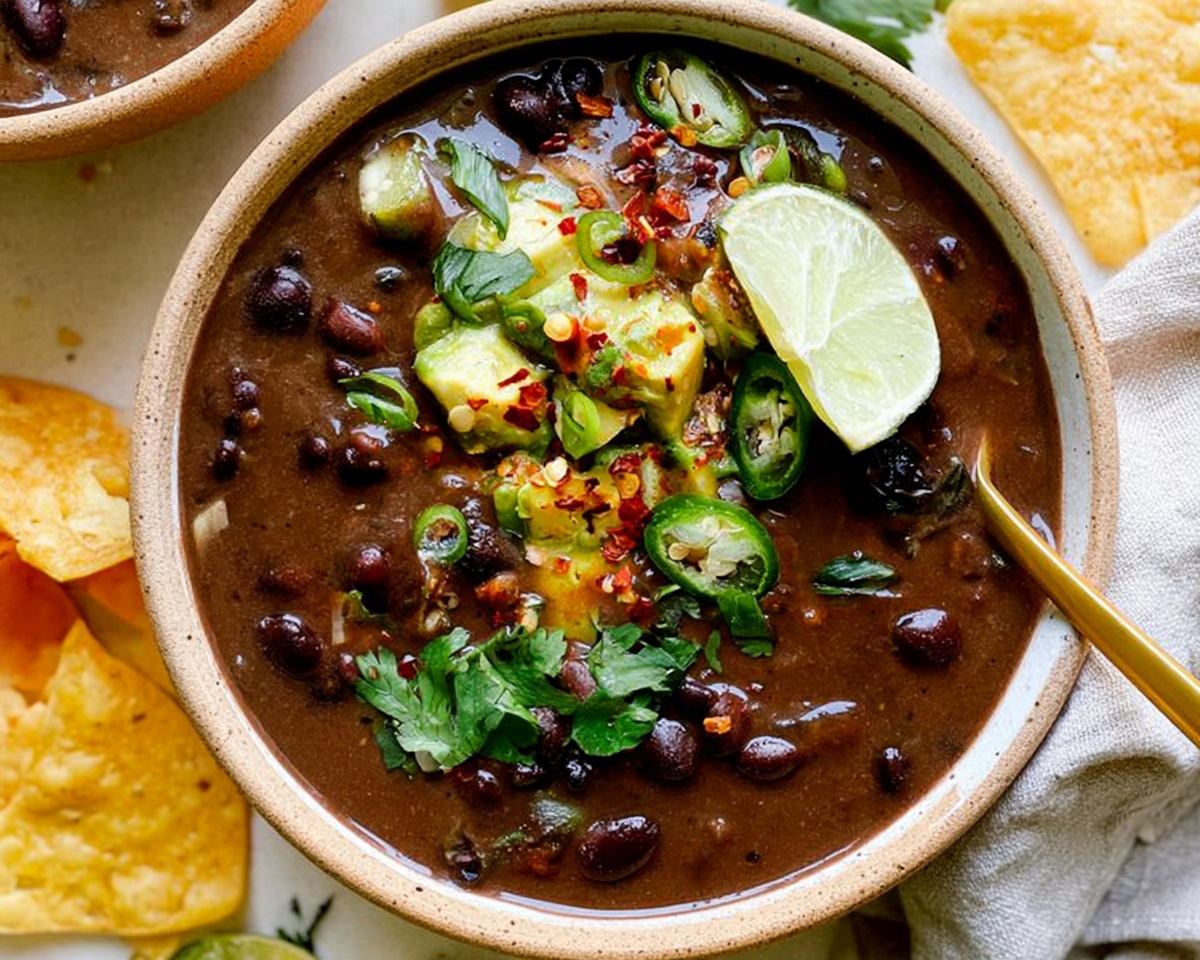
- Sliced jalapeño works well when you want extra heat without changing the whole pot.
- Tortilla strips or crushed tortilla chips add crunch, which is especially nice against the creamy broth and tender beans.
What to Serve With Black Bean Soup
For a simple meal, a bowl of soup with warm cornbread or tortillas is usually enough. If you want something more substantial, serve it with quesadillas or spoon it alongside rice.
A crisp green salad is a good match because it adds freshness without making the meal feel too heavy. Keep the side simple so the soup, toppings, and fresh lime stay at the center of the plate.
For another cozy option, try this easy butternut squash soup.
Variations and Substitutions
- Make it spicier or milder. For more heat, stir in jalapeño, cayenne, or another chile. If you prefer a milder soup, skip the added chiles and let the cumin and oregano provide plenty of warm, savory flavor.
- Use a different broth. Vegetable broth keeps the soup meat-free, but you can use chicken broth for a slightly richer, more savory taste. The cooking method stays the same with either option.
- Add corn. Stir the corn in near the end of the simmer so it has time to heat through without getting too soft. It adds a little sweetness and extra texture to the soup.
For another easy way to use black beans, try this black bean burger recipe. If you’re looking for another hearty meat-free dish, this vegan lentil soup is another good option.
How to Store, Freeze, and Reheat
Refrigerator Storage
Let the soup cool for a short time, then portion it into shallow airtight containers and refrigerate it within 2 hours of cooking. Store it in the refrigerator for up to 4 days.
The soup will usually thicken as it rests because the beans continue to absorb some of the liquid.
Freezing
Black bean soup can be frozen for up to 3 months. Transfer it to freezer-safe containers, leaving some room at the top to allow for expansion as the soup freezes.
For individual servings, smaller containers are a convenient option. Keep toppings such as avocado, cilantro, sour cream, and tortilla strips separate, then add them once the soup has been reheated.
Reheating
When you can, thaw frozen soup in the refrigerator before reheating it. Warm the soup on the stovetop over medium-low heat, stirring occasionally, or heat individual portions in the microwave.
Reheat the soup until it reaches 165°F throughout. If it has become thicker during storage, stir in a splash of vegetable broth or water while it warms until you get the consistency you prefer. Taste before serving, then add fresh lime or adjust the seasoning slightly if needed.
Black Bean Soup FAQ
Can I use dried black beans instead of canned?
Yes. Cook the dried beans until they’re tender before adding them to the soup, and soak them first if that’s part of your usual method. Because this recipe is designed around canned beans, using dried beans will require quite a bit more prep and cooking time.
Why does my black bean soup taste flat?
Usually it needs salt or acidity. Taste for salt first, then add fresh lime juice a little at a time. If the flavors still seem separate, give the soup a few additional minutes at a gentle simmer before tasting again.
Why did my black bean soup become too thick?
It’s normal for black bean soup to thicken after chilling. As you reheat it, stir in a small amount of broth or water until it loosens back to the consistency you like.
Can I make black bean soup ahead of time?
Yes. This soup works well for advance preparation because the flavors hold up well after chilling. Store it according to the refrigerator guidelines above, then reheat it thoroughly before serving.

Black Bean Soup
Ingredients
Equipment
Method
- Sauté the vegetables: Heat the olive oil in a large pot over medium-high heat. Add the onion, carrot, celery, and red bell pepper. Cook for about 5 minutes, stirring occasionally, until the vegetables begin to soften.
- Add the garlic: Reduce the heat to medium. Add the minced garlic and cook for 30–60 seconds, stirring constantly, until fragrant without browning.
- Add the beans and seasonings: Stir in the drained black beans, vegetable broth, cumin, oregano, and bay leaf. Season lightly with salt and black pepper, then bring to a gentle simmer.
- Simmer the soup: Reduce the heat to low and simmer for about 25 minutes, until the vegetables are tender and the flavors have developed.
- Partially blend: Remove the bay leaf. Use an immersion blender to puree part of the soup, leaving plenty of whole beans. Alternatively, carefully blend a portion in a heat-safe countertop blender in small batches, venting the lid to release steam, then return it to the pot.
- Finish and serve: Adjust the consistency with a little extra broth if needed. Stir in the fresh lime juice and cilantro. Taste, adjust the seasoning, and serve warm with your preferred toppings.