
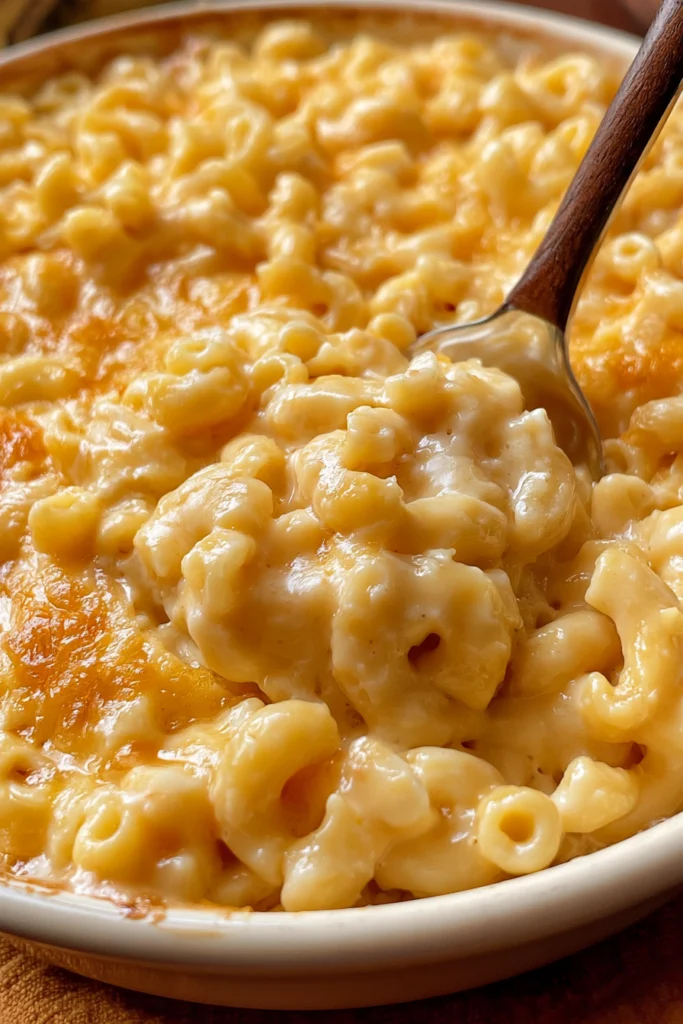
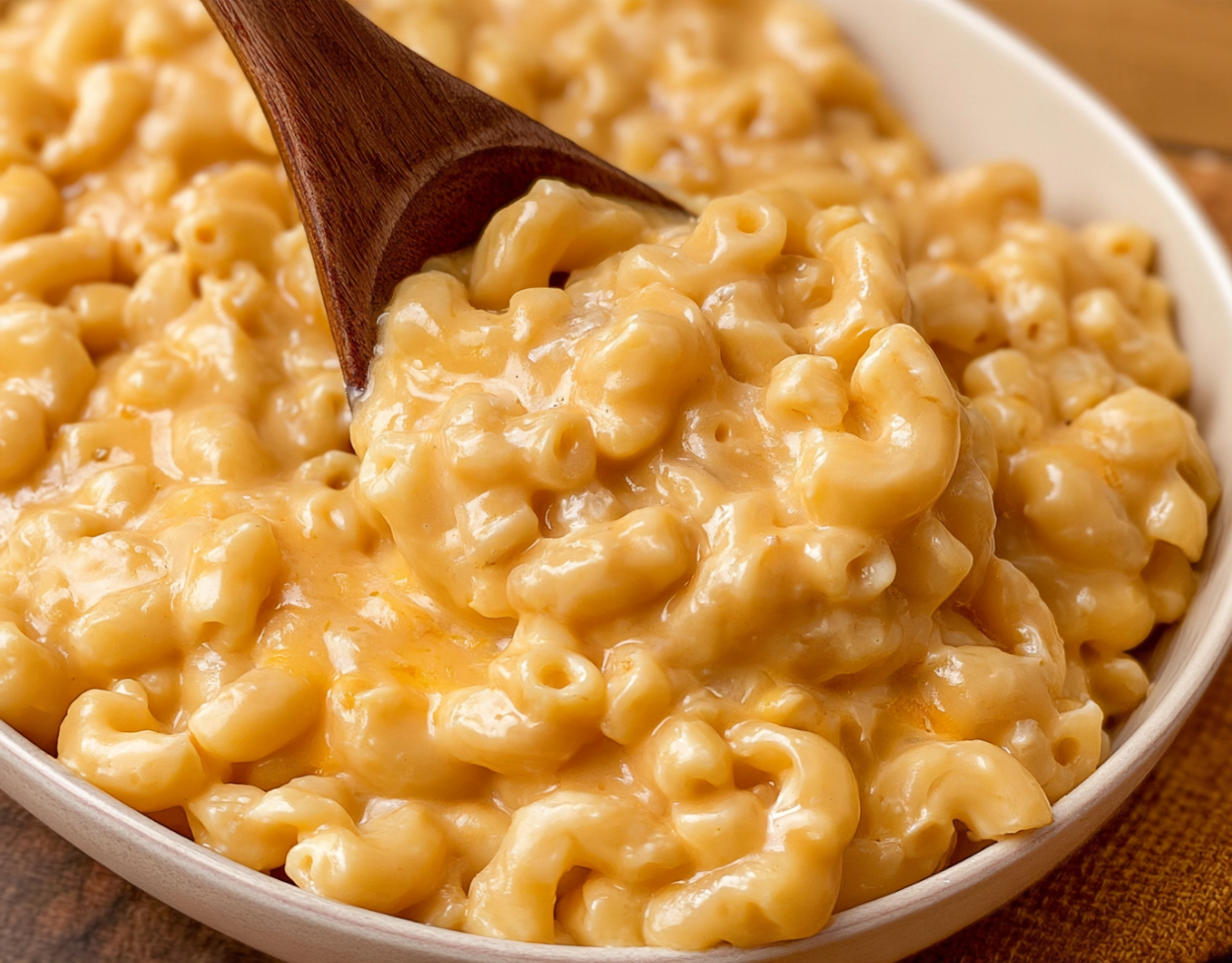
Cottage cheese mac and cheese is a great option when you want something with a little more protein that still tastes like the mac and cheese you’re craving. Once the cottage cheese is blended, the curds disappear into the sauce, leaving it smooth and creamy.
Sharp cheddar gives this version plenty of cheesy flavor, while a little Dijon mustard, garlic powder, and paprika round everything out. I especially like the Dijon here because it gives the cheddar a bit more bite without leaving an obvious mustard flavor behind.
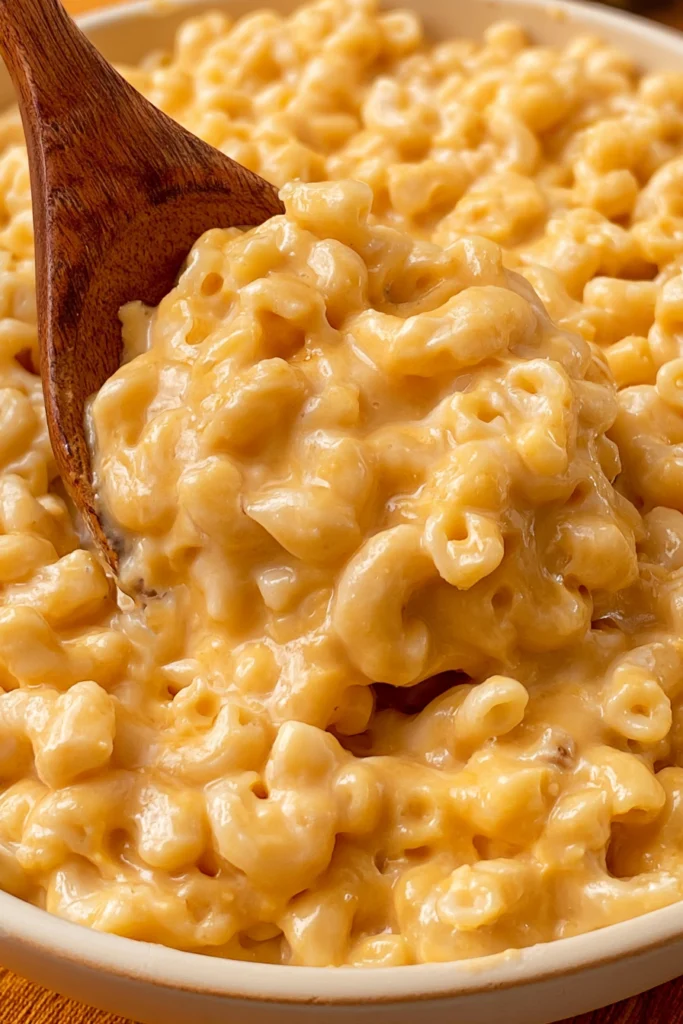
Everything comes together right on the stovetop, so there’s no baking needed. The creamy sauce coats the elbow macaroni without turning thick or pasty. It’s an easy, comforting dish that works perfectly for a simple dinner.
Why Cottage Cheese Works in Mac and Cheese
When blended with milk, cottage cheese becomes a smooth, creamy base that works beautifully in mac and cheese. It gives the sauce plenty of body without relying on a traditional butter-and-flour cheese sauce.
Its mild flavor also lets the sharp cheddar take center stage while adding extra protein to the dish. You still get that familiar cheesy flavor you expect from mac and cheese.
For the best texture, blend the cottage cheese mixture until it’s completely smooth, with no small curds remaining. This gives the finished sauce an even, creamy consistency instead of leaving bits of cottage cheese throughout the pasta.
Ingredients You’ll Need
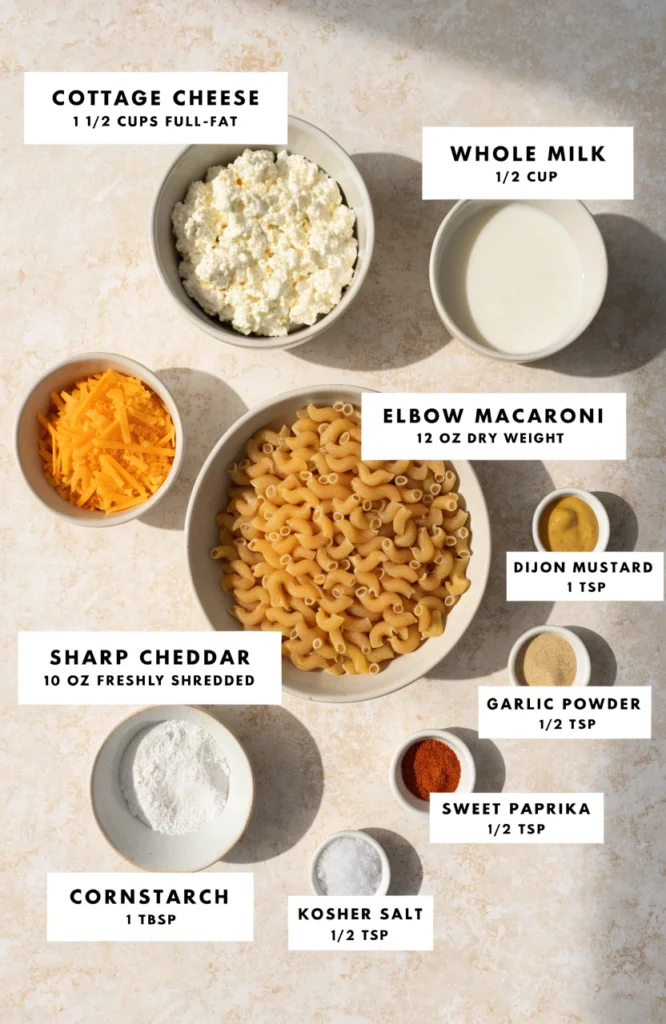
You only need a handful of ingredients for this mac and cheese, but a few choices make a noticeable difference in how the sauce turns out.
- Elbow macaroni: The little curves catch plenty of sauce in every bite. Another short pasta shape with ridges or pockets will work too.
- Cottage cheese: Blends into a smooth, creamy base for the cheese sauce.
- Milk: A little milk helps the cottage cheese blend easily and keeps the sauce from becoming too thick.
- Sharp cheddar cheese: Sharp cheddar works especially well because cottage cheese is fairly mild. It gives the finished dish that stronger cheese flavor you expect from mac and cheese.
- Cornstarch: Tossing the shredded cheddar with cornstarch helps it melt into the sauce more evenly.
- Dijon mustard: Just a small amount brings out the cheddar’s tang without making the pasta taste like mustard.
- Garlic powder: Adds a gentle savory flavor without bits of fresh garlic in the smooth sauce.
- Sweet paprika: Adds mild warmth and a little extra depth.
- Kosher salt: Brings all the flavors together. Taste before adding more at the end, since cheddar can already be fairly salty.
Choosing the Cottage Cheese and Cheddar
Full-fat cottage cheese is my preference here because it gives the sauce a richer finish. Lower-fat cottage cheese can work too, although the finished sauce may taste a little lighter.
Buying a block of cheddar and shredding it yourself is also worth the extra minute. Pre-shredded cheese is convenient, but the added anti-caking ingredients can keep it from melting quite as smoothly.
How to Make Cottage Cheese Mac and Cheese
- Cook the macaroni. Bring a large pot of salted water to a boil and cook the elbow macaroni until al dente. Before draining, scoop out about 1 cup of pasta water and set it aside. Drain the pasta, but don’t rinse it.
- Blend the cottage cheese mixture. Add the cottage cheese, milk, Dijon mustard, garlic powder, sweet paprika, and salt to a blender. Blend until completely smooth. Let it run a little longer than seems necessary—you shouldn’t see any cottage cheese curds when it’s ready.
- Coat the cheddar. Place the freshly shredded cheddar in a large saucepan and sprinkle the cornstarch over it. Toss well so the cornstarch lightly and evenly coats the cheese, which helps it melt smoothly into the sauce.
- Make the cheese sauce. Pour the blended cottage cheese mixture over the cheddar. Warm it over medium-low heat, stirring continuously, until the cheddar is fully melted and the sauce is smooth. Keep the heat gentle so the sauce never reaches a simmer or boil.
- Add the macaroni. Add the drained pasta to the saucepan and stir until every piece is well coated. Let everything come together briefly over gentle heat.
- Adjust the consistency. If the sauce feels thicker than you like, stir in reserved pasta water a tablespoon or two at a time. Stop adding it when the sauce easily coats the macaroni but still looks creamy rather than runny. Taste, adjust the salt if needed, and serve while warm.
Troubleshooting the Cheese Sauce
Even a simple cheese sauce can vary in texture depending on the heat, the type of cheese, and how much moisture the pasta soaks up. Fortunately, most texture issues are easy to correct.
If the Sauce Is Too Thick
The sauce will thicken as it sits, so don’t worry if it tightens up quickly. Stir in a tablespoon or two of the reserved pasta water at a time until it loosens.
You’re looking for a sauce that easily coats the macaroni and settles into all those little curves without pooling at the bottom of the pan. Add the water gradually—it’s much easier to thin the sauce than fix one that has become watery.
If the Sauce Is Too Thin
Give the pasta a minute to rest before adjusting the sauce. As it sits, the macaroni will absorb some of the moisture and the sauce will begin to thicken. If it still looks too loose, stir it gently over low heat until it reaches the consistency you want.
Don’t turn up the heat to hurry the process. A strong simmer can cause the cheese sauce to separate instead of thickening smoothly.
If the Sauce Is Grainy or Curdled
High heat is usually the first thing to check when a cheese sauce turns grainy. Cheddar can separate when it gets too hot, so keep the sauce below a simmer and remove it from the heat once the cheese has melted.
Visible little white curds are more likely a blending issue. Blend the cottage cheese mixture until it looks completely smooth before making the sauce.
Substitutions and Add-Ins
You can change up this mac and cheese without losing what makes the recipe work. Just keep in mind that swaps involving the cottage cheese, milk, or cheddar can change the texture of the sauce.
Cheese and Dairy Substitutions
- Different cheddar: Medium cheddar is a good option if you prefer a milder cheese flavor.
- Other melting cheeses: Monterey Jack, Colby, or Gouda can replace some of the cheddar. Keeping at least part of the sharp cheddar helps preserve that classic mac and cheese flavor.
- Milk: Whole milk gives the sauce a little more richness, but 2% works well too. An unsweetened, neutral-flavored nondairy milk can also work, although it may slightly change the flavor and consistency.
Easy Add-Ins
- Broccoli or peas: Stir cooked vegetables into the macaroni when you add it to the sauce.
- Spinach: Add a handful of baby spinach to the warm sauce and let it wilt before serving.
- Cooked chicken: Fold in chopped or shredded chicken for a more filling meal.
- Bacon: Sprinkle crisp, crumbled bacon over the top or stir it through just before serving.
- Extra heat: A pinch of red pepper flakes or a few dashes of hot sauce works especially well with the sharp cheddar and Dijon.
What to Serve With Cottage Cheese Mac and Cheese
This mac and cheese is filling enough to serve on its own, but something fresh or simple alongside it can balance the creamy sauce nicely.
- Green salad: A crisp salad with a tangy vinaigrette gives you a nice contrast to the rich cheddar sauce.
- Vegetables: Try whole roasted cauliflower, roasted or steamed broccoli, Brussels sprouts, green beans, or asparagus to balance the creamy pasta.
- Chicken: Serve it with chicken made using this Greek yogurt chicken marinade to turn the mac and cheese into a hearty side dish.
Storing and Reheating Leftovers
Refrigerator Storage
Let leftover mac and cheese cool, then transfer it to an airtight container and refrigerate it for up to 4 days. The sauce will become noticeably thicker in the refrigerator as the pasta absorbs some of the moisture.
How to Reheat It Without Drying It Out
To reheat on the stovetop, add the mac and cheese to a small saucepan with a splash of milk. Warm it gently over low heat, stirring as it heats. If the sauce is still too thick, add a little more milk until it becomes creamy again.
For individual portions, the microwave works well too. Stir in a small amount of milk, loosely cover the dish, and heat in short intervals, stirring in between. Once the mac and cheese is hot and creamy, stop heating it so the sauce doesn’t become oily or dry.
Cottage Cheese Mac and Cheese FAQs
Does Cottage Cheese Make Mac and Cheese Taste Like Cottage Cheese?
Not really. Cottage cheese is mild, so its flavor blends easily into the sauce. Once you add the sharp cheddar, Dijon mustard, garlic powder, and sweet paprika, the result tastes creamy and cheesy without a noticeable cottage cheese flavor.
Can You Make It Without Blending the Cottage Cheese?
Yes, but you’ll end up with a different texture. Without blending, the cottage cheese curds will stay visible and noticeable in the sauce. For a smooth, creamy mac and cheese, I prefer blending the cottage cheese until the curds disappear.
Can You Make Cottage Cheese Mac and Cheese Ahead of Time?
Yes, although the texture is best when it’s made close to serving time. To get a head start, blend the cottage cheese mixture and shred the cheddar ahead of time. Then cook the pasta and prepare the sauce when you’re ready to serve.
You can also refrigerate the fully prepared mac and cheese, but keep in mind that the sauce will thicken after chilling and reheating.
More Cottage Cheese Recipes
If you have cottage cheese left in the container, put it to use in one of these recipes next:
- Cottage Cheese Pancakes – an easy option for breakfast.
- Cottage Cheese Banana Bread – a simple way to use cottage cheese in baking.
- Cottage Cheese Chocolate Mousse – a creamy chocolate option for dessert.
- Cottage Cheese Brownies – another chocolate recipe that puts cottage cheese to use.

Creamy cottage cheese mac and cheese
Ingredients
Equipment
Method
- Bring a large pot of generously salted water to a boil. Add the macaroni and cook according to the package directions until al dente. Before draining, reserve about 1 cup of the pasta water. Drain the macaroni without rinsing.
- While the pasta cooks, add the cottage cheese, milk, Dijon mustard, garlic powder, sweet paprika, and kosher salt to a blender. Blend until completely smooth and no visible curds remain.
- Place the shredded cheddar in a large saucepan and sprinkle the cornstarch over it. Toss until the cheese is evenly coated.
- Pour the blended cottage cheese mixture over the cheddar. Set the saucepan over medium-low heat and cook, stirring constantly, just until the cheddar has melted and the sauce is smooth. Don’t let the sauce simmer or boil.
- Add the drained macaroni and stir until thoroughly coated. Keep it over low heat just long enough for the pasta and sauce to come together.
- If the sauce is thicker than you like, stir in reserved pasta water 1 to 2 tablespoons at a time until it loosely coats the macaroni. Taste and adjust the salt if needed. Serve warm.
Notes
- For the smoothest melt, shred the cheddar from a block.
- The sauce thickens as it stands, so keep some reserved pasta water nearby if you aren’t serving it immediately.
- Avoid boiling the cheese sauce. Gentle heat helps the cheddar stay smooth and creamy.
- Refrigerate leftovers in an airtight container for up to 4 days.